



































The guidance on overcoming pushback reflects the increasingly hostile public sentiment toward AI as an expanding grassroots movement of parents demands less reliance on computers in schools. In the month before the training, Pope Leo XIV urged more regulations to slow AI adoption, college graduates booed ex-Google CEO Eric Schmidt and other commencement speakers when they promoted AI, and one of the country’s largest teachers unions called for limits on AI and screen time in elementary schools.
AI is playing a larger role in classrooms: Some states already require schools to provide AI instruction, universities are paying millions to provide chatbots for students, and the federal government is prioritizing AI in education grants. But recent surveys found most teachers have not received guidance on how to use AI in their work.
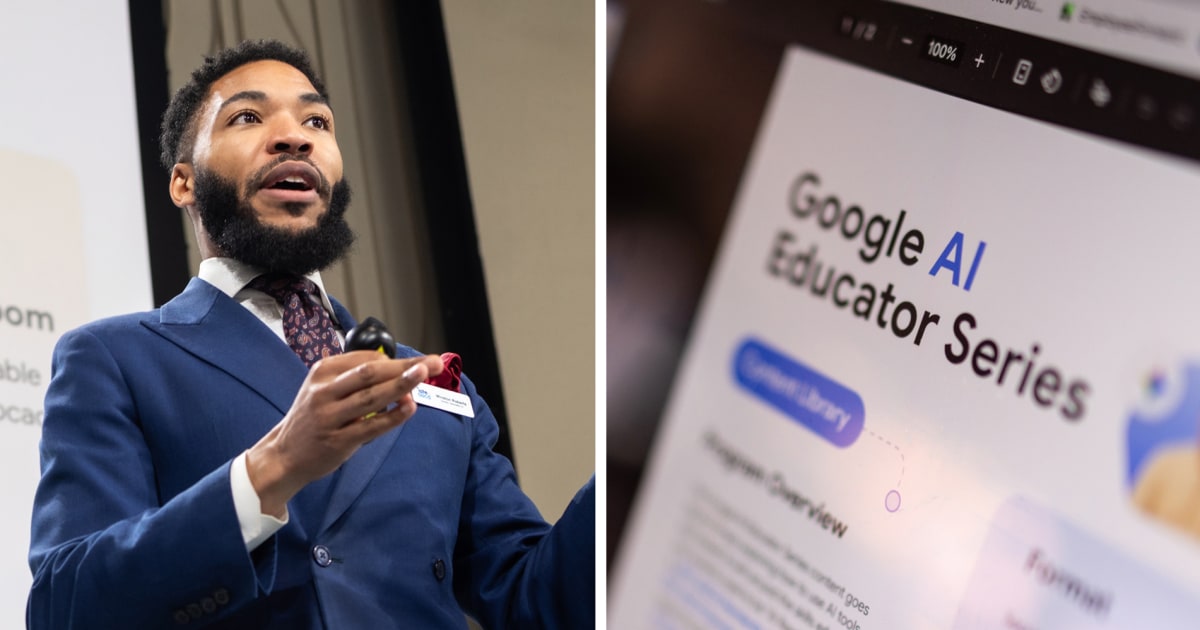
Jennie Magiera, global head of education impact at Google, said in an interview during the training that teachers and students are going to continue using AI more as it advances. She said Google wants to train as many teachers as possible so they can “harness the power” of AI and “use it for good.”

Some teachers at the training said they were glad to have the chance to learn about the rapidly evolving technology rather than being left to figure it out themselves.
Karen Compton, an English teacher at a middle school in Ewa Beach, Hawaii, said that AI rarely came up in her classroom last year but that it’s “all over the place” now and she had to figure it out quickly. AI is a part of students’ vocabulary — they refer to things they think aren’t real as AI — and she feels a responsibility to make sure they know what they’re talking about.

“If a student’s running in the hallway, you don’t take away the hallway — you teach them the proper behavior for the hallway,” Compton said. “And I think this mimics that in the same way.”
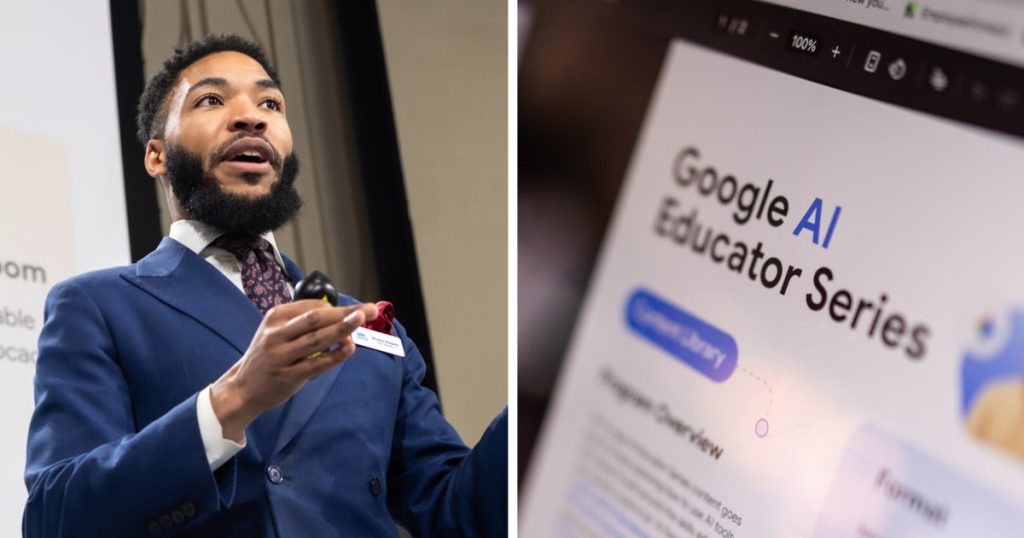
In May, Google rolled out free online training modules on its AI tools for K-12 administrators and educators, and college faculty members, with guidance about creating study guides, crafting lesson plans and analyzing where students are getting stuck.
The training materials describe Gemini as “an engine for high-quality instruction” to do the “heavy lifting” for designing classroom lessons. “As an educator, this shift moves you into the role of a ‘learning conductor,’” one slide states. Google plans to release additional modules monthly starting in September to capture developments in the technology.
“It’s really, really important that we use it,” Joseph South, chief innovation officer for ISTE+ASCD, the nonprofit group working with Google, said of AI at last week’s training. “We can’t just ignore it, we can’t ban it, we can’t keep it out of our schools — that’s not gonna prepare us for the future.”

Google has offered training in its products for teachers for two decades, before it began promoting its Chromebook operating system as a way for school districts to provide a laptop for every student. Chromebooks now dominate the education technology market.
In an undated presentation, Google described its presence in schools as a way to build a “pipeline of future users,” according to internal company documents revealed in court that NBC News first reported on in January.
Additional internal records, unsealed in court filings in February, indicate that Google has long considered how AI could be used in schools. A 2018 presentation about keeping Google at the top of the education technology space said schools wanted more “Personalized Learning” and “Adaptive Content” and identified machine learning and AI as major trends it could seize upon.
“Educators are sitting on a growing goldmine of data,” the presentation said, but they needed help organizing and making sense of it. If Google designed ways for schools to use student data, it would set “the stage for us to reinvent the education system through data.”
A Google spokesperson previously said that the heavily redacted internal documents released through court filings “mischaracterize our work” and that the company has responded to schools’ demand for its products.