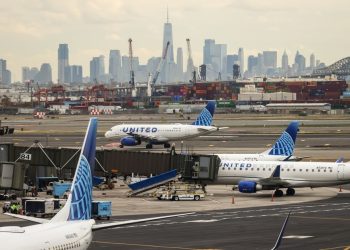































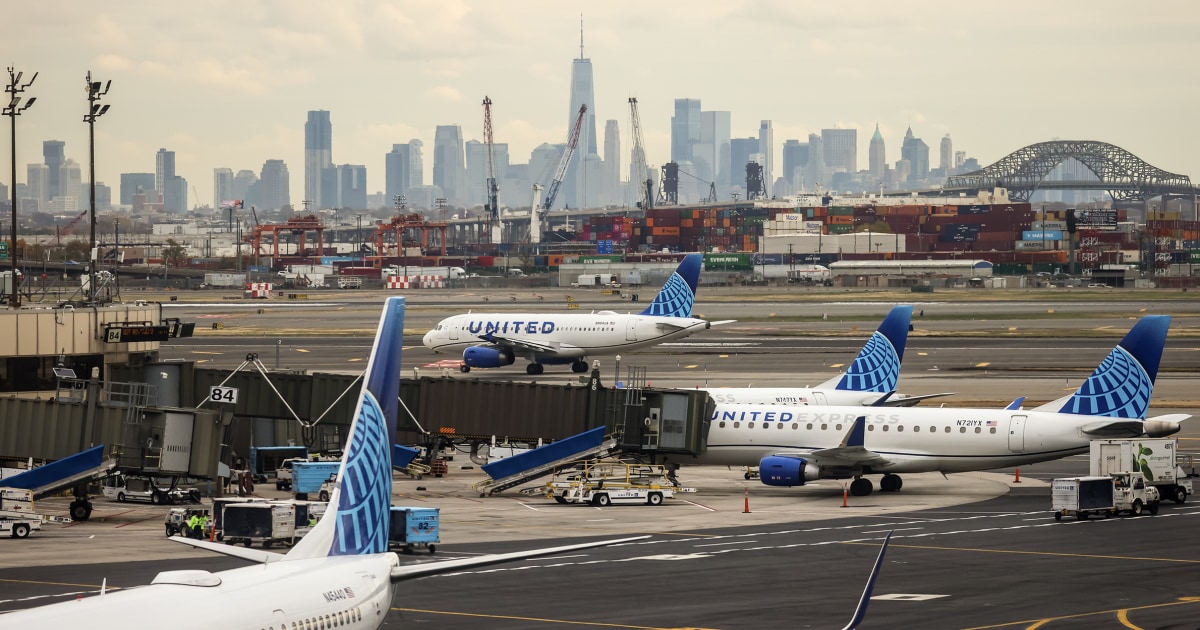
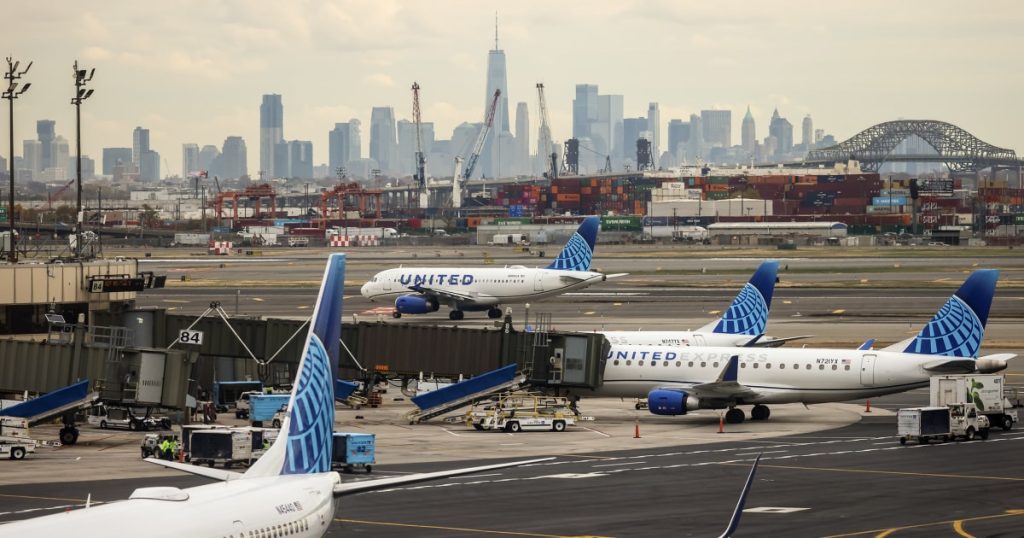
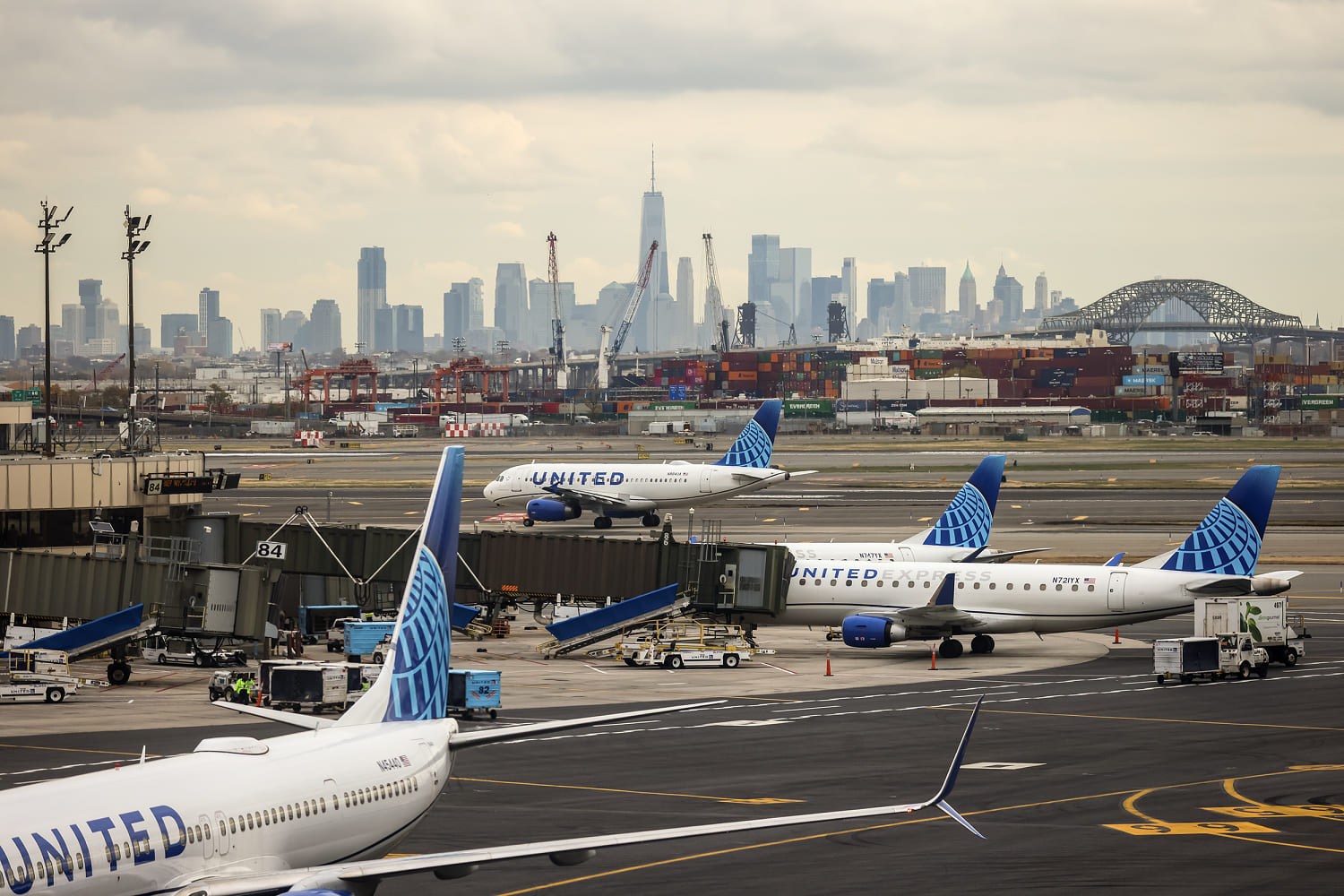

A major circuit blew at the Philadelphia facility that controls air traffic to Newark Liberty International, Teterboro and Philadelphia airports Monday — causing widespread delays and cancellations to thousands of flyers on the East Coast.
Dozens of planes were left idling for hours on runways across the region while the FAA scrambled to repair the issue affecting Philadelphia’s Terminal Radar Approach Control, or TRACON, facility that houses both a radar approach control room and an air traffic control tower.
Transportation Secretary Sean Duffy said shortly after 5 p.m., some seven hours after the circuit blew, that the telecom lines had been repaired and all flights were resuming in the Northeast.
Delays would take time to clear, he said.
Federal Aviation Administrator Bryan Bedford said after the malfunction at TRACON that they tried to get the backup system up and discovered the backup line had been cut at a New Jersey construction site.
“That fiber break is probably 13 hours to repair,” Bedford warned. “It’s massive, I’m told. Meanwhile, we’ve got the new circuit ready to install now.”
Duffy said an Amtrak construction crew accidentally severed a fiber line in New Jersey, which caused a telecom outage and forced the FAA to pause Northeast flights.
“This incident underscores the need for additional funding to modernize aging infrastructure and prevent disruptions like this in the future,” Duffy wrote.
An Amtrak spokesperson told NBC that it was a New Jersey Transit contractor who accidentally cut the cable.
NJT said in a statement that a construction crew working between New Brunswick and North Brunswick “accidentally severed a fiber-optic cable” at 9:45 a.m. but indicated that it was working to determine if a Verizon crew might be at fault.
Verizon denied being at fault and placed blame with the NJT crew.
“Earlier today, construction crews for New Jersey Transit cut a Verizon fiber cable running adjacent to a rail line in New Jersey,” the company said in a statement. “Verizon’s facilities were fully functional up to that point.”
Initially, the FAA ordered ground stops at Newark Liberty International, Teterboro and Philadelphia airports.
Later, the ground stops were expanded to both LaGuardia and John F. Kennedy International airports in New York City, causing delays to hundreds of flights as many foreign leaders were flying in for the United Nations General Assembly.
The ground stop at Newark began around 10 a.m. after the stops at Teterboro and Philadelphia went into effect.
The result was departure delays of up to 150 minutes out of Newark and Philadelphia, according to the FAA’s website.
As of 6 p.m. ET, there were nearly 619 flights canceled at Newark airport and 197 flights canceled at Philadelphia, according to data from flightaware.com. Hundreds of additional flights were delayed at both airports.
One pilot appeared to be in the dark about what was causing the delays, according to an audio obtained by NBC News from ATC.com.
“What’s with the ungodly takeoff lines,” a pilot asked the air traffic control tower in Philadelphia at 11:45 a.m., according to the ATC.com audio.
“Equipment issues,” a controller replied.
“Is that expected to continue?” the pilot asked.
“No clue,” the controller said.
This is one of the heaviest air travel corridors in the country, and last year an equipment malfunction left about a dozen planes flying blind for 90 seconds in the crowded skies over New Jersey.
Duffy insisted at the time that there was never any danger of planes colliding during that brief communications breakdown.