



































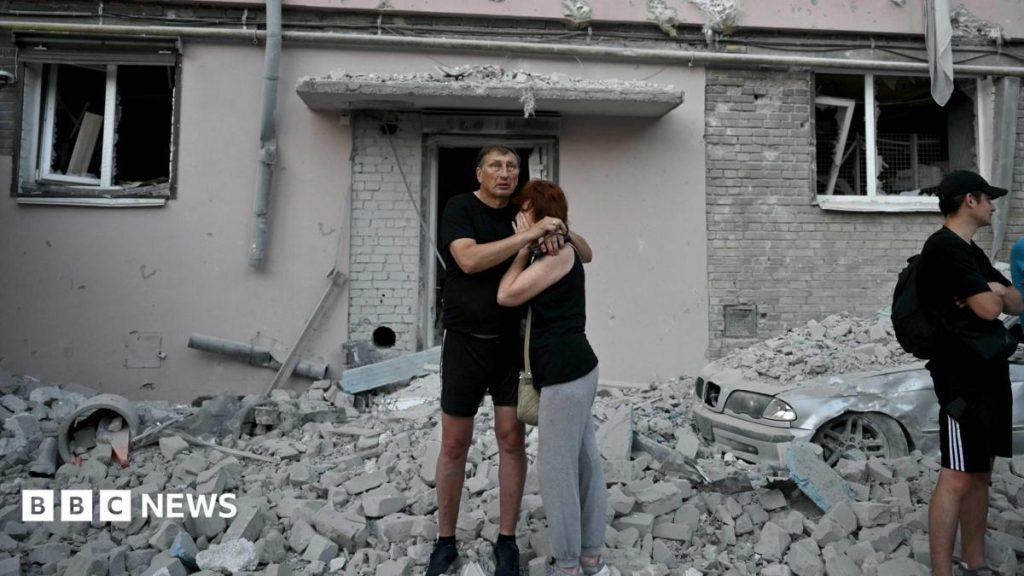

The attack on Kyiv lasted more than 11 hours and came in several waves starting with a drone strike on Kyiv’s historic quarter, setting off a fire in a hotel in the city centre.
At 01:00, dozens of ballistic and cruise missiles were fired. A brief lull preceded another dozen of Kh-101 cruise missiles at 03:00, followed by a swarm of drones which targeted the capital until dawn.
Residents of Kyiv who have lived through four-and-a-half years of war say they have perceived a change in the pattern of Russia’s assaults on the capital over the last two months. Attacks may now happen less frequently – albeit still every few days – but last longer, and seem more powerful and widespread.
Ukrainian military experts described the latest barrage as one of the most challenging assaults for the country’s air defences in recent months.
Aviation expert Bohdan Dolintsev told Ukrainian media that Russia’s technique of using multiple types of weapons within the same time window, and wearing down Ukraine’s defences creates an exceptionally complex challenge for Ukraine’s air defence systems.
Ukraine’s air force said Russia had launched 74 missiles and 496 drones overnight, mainly targeting the capital.
While the country’s air defences were able to repel most of these, 25 ballistics missiles and 12 drones struck 33 locations.
Zelensky urged the US to grant licences to manufacture Patriot air defence missiles, saying these supplies were “an absolute and critical priority”.
Foreign Minister Andriy Sybiha called on Ukraine’s partners to send more air defence systems, saying the country needed “not only words of condemnation but concrete action to stop Russian terror”.
He posted on X that Russia had targeted residential buildings and civilian infrastructure, and called on partners to increase sanctions on Russia.